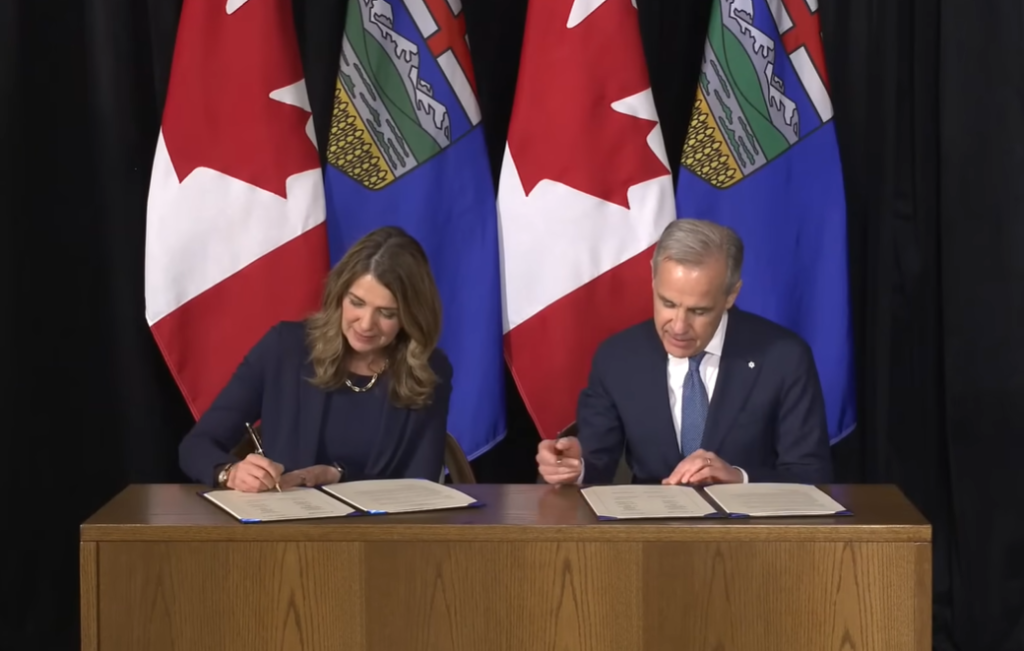
Alberta and Canada have agreed on a plan that could lead to construction of a new Indigenous co‑owned west coast oil pipeline as early as 2027. For CLRA members, this signals more predictable timelines, fewer overlapping reviews and the potential for steady construction demand across pipeline, electricity and carbon capture projects. Together, these factors provide the kind of certainty needed to plan, staff and finance major construction projects across these sectors.
A Possible Pipeline
The new Alberta-Canada energy MOU requires Alberta to submit a comprehensive proposal for a bitumen pipeline, which would move more than one million barrels of oil per day to Asian markets, to the federal Major Projects Office by July 1, 2026. In turn, it commits the federal government to review Alberta’s pipeline submission through the Major Projects Office and decide by October 1, 2026 whether it will be a project of national interest. If approved, design and construction of the proposed pipeline could begin by September 1, 2027.
Significant conditions remain. B.C. has not consented to a northern route and Indigenous consultation is ongoing. Both governments say they will work with First Nations and Métis communities early and consistently, and that the project could support long‑term jobs, training and ownership opportunities for Indigenous communities.
The pipeline approval is also directly linked to the Oil Sands Alliance Pathways Project moving forward. The Pathways Project is the largest carbon capture, utilization and storage project in the world, and Canada and Alberta reaffirmed their commitment that it would achieve 16 million tonnes of annual emissions reductions, while generating $16.5 billion in GDP, $12.2 billion in labour income, and up to 43,000 jobs annually. The pipeline does not proceed without it.
Revised Carbon Pricing Model
The MOU also includes a new carbon pricing plan. The carbon price will stay at $95 per tonne through 2026, rise to $100 in 2027 and reach $130 by 2035. The price floor and changes to Alberta’s TIER system are meant to reduce volatility and support investment in technology.
Government estimates say the agreement avoids about $250 billion in added industrial carbon costs through 2050, and the clearer pricing system could help advance CCUS, electricity generation and other large projects.
Several earlier commitments were confirmed, including no federal oil and gas emissions cap, the pause of Federal Clean Electricity Regulations in Alberta, and streamlined impact assessments. A joint electricity working group will study nuclear, geothermal, abated natural gas, wind, solar and hydrogen.
A Step Towards Predictability
Construction employers depend on clear rules, predictable reviews and long‑term project pipelines. This agreement has more detail and more binding commitments than the November MOU, and that is progress.
The “one project, one review” framework, if implemented as described, directly addresses the duplication that has made Alberta’s regulatory environment unpredictable. If carried out successfully, the MOU could reduce delays, support investment and create steady demand for skilled labour across the pipeline, electricity and CCUS work.
The largest question that remains is execution. B.C.’s opposition to a northern pipeline route is still unresolved. Indigenous consultation must run concurrently with planning and approvals, not sequentially. The Pathways Project coalition must also commit to construction before the pipeline can proceed.
Conclusion
The agreement is a positive step, but it does not solve the core issue. Alberta has major projects lined up and a workforce ready to build, yet approvals remain slow and unpredictable. Investors and employers need results, not just commitments.
CLRA will continue to push for a system that keeps pace with industry. This means firm timelines, clear pathways for large projects and fewer delays once requirements are met. Alberta has the capacity to build what Canada needs. With the right regulatory certainty, our people can get to work.
Photo credit: Government of Alberta